
STIA Faculty Spotlight: Rajesh Veeraraghavan
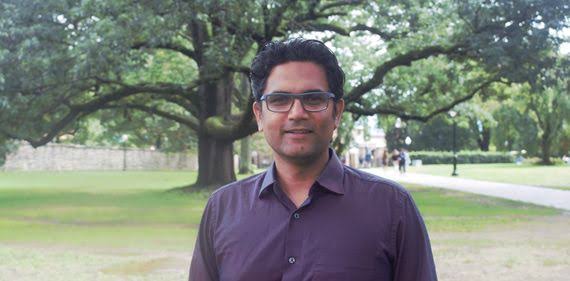
Rajesh Veeraraghavan
When Prof. Rajesh Veeraraghavan transitioned from a career as a software engineer to academia, he realized that technology was primarily about the people, going beyond the code.
Motivated by a desire to use data and emerging technologies to empower underserved and overlooked communities, he brought this perspective to Georgetown University’s School of Foreign Service (SFS) in 2016.
Joining the Science, Technology and International Affairs (STIA) program was a natural fit. In many academic circles, scholars often find themselves having to justify work that blurs the lines between technical engineering and social science. At Georgetown, however, Prof. Veeraraghavan found an environment that not only embraces but actively values his multidisciplinary work.
His research focuses on the micro-politics of technology, examining how digital systems are negotiated in real-world practice and the often-invisible human labor required to sustain technological change. By anchoring his work in Georgetown’s Jesuit tradition of public service, Prof. Veeraraghavan explores how digital tools can reshape governance and accountability for marginalized communities.
For Prof. Veeraraghavan, the most rewarding aspect of his time at Georgetown so far has been the synergy between research and teaching. A definitive highlight was co-leading an SFS Centennial Lab in collaboration with the Dakar American University of Science and Technology in Senegal. The initiative reflected his commitment to experiential learning, challenging students to engage directly with unfamiliar environments and perspectives.
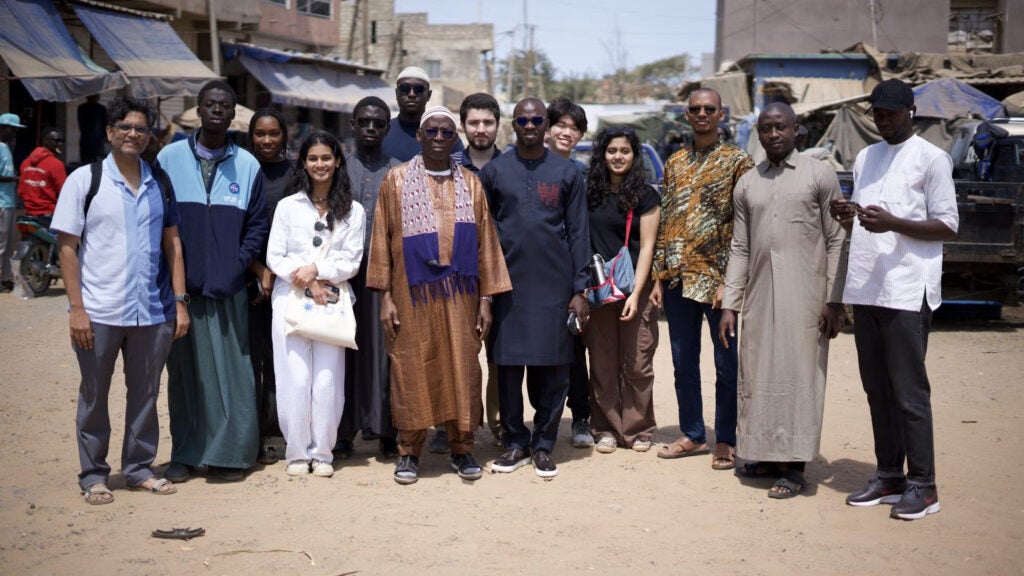
Prof. Veeraraghavan urges his students to “get out of the bubble,” emphasizing that while theory provides a foundation, meaningful understanding comes from engaging with lived realities.
“Get out of the bubble.”
In an era increasingly defined by artificial intelligence, Prof. Veeraraghavan believes that human connection is more valuable than ever. He encourages students to find issues that resonate with them personally and to seek out impactful work both at home and within the unique landscape of Washington, D.C. In his words, “real experiences are what give one power,” a principle that he hopes will guide students as they navigate the intersection of technology and global social change.