
Student & Faculty Q&A: Connecting Science to Global Challenges with Professor Cynthia Wei
Science plays an essential role in understanding many of today’s most pressing global challenges, from public health and food security to environmental change and emerging technologies. For STIA Professor Cynthia Wei, helping students understand how scientific knowledge is developed, evaluated, and applied is at the heart of her teaching.
As Professor and Director of Science Education in the STIA program, Wei leads the Science for All (SFA) program and teaches courses that connect scientific concepts to real-world issues in international affairs.
In this Student & Faculty Q&A, Professor Wei discusses her path from studying animal cognition to science policy and education, her case study-based approach to teaching, and what she hopes students take away from their experiences in the classroom.
From Honeybees and Birds to Science Policy
What did you study before coming to Georgetown, and what drew you here?
“I am a biologist by training. I often joke that I studied the bees and the birds—in that order. For my Ph.D., I studied learning in honeybees, and during my postdoctoral research, I focused on animal cognition in birds. After that, I pivoted to science policy through the AAAS Science and Technology Policy Fellowship, which places scientists in federal agencies. I was placed at the National Science Foundation, where I worked in the Division of Undergraduate Education. That experience gave me a broader perspective on science education and policy. I then joined the National Socio-Environmental Synthesis Center, an NSF-funded center at the University of Maryland, where I served as Associate Director of Education. I led educational programs, worked with postdoctoral researchers and undergraduate interns, and managed a summer internship program. Much of this work focused on developing interdisciplinary approaches to environmental challenges by bringing together the natural and social sciences. What drew me to Georgetown was the opportunity to build the Science for All program. I saw it as an exciting challenge to design science courses that connect scientific knowledge to international affairs and global issues. I feel strongly that understanding the scientific process is an important part of being an educated person.”
Teaching Science Through Real-World Questions
Can you talk about the courses you teach?
“I primarily teach Science for All courses, along with an environmental writing class. I designed the Science for All courses around the case study method. Rather than beginning with scientific theories and then asking students to apply them, I begin with a story or real-world problem that School of Foreign Service students can understand and recognize as important. From there, we work backward to explore how science helps us understand the issue. Students are often more engaged when they see why science matters first.
What are some examples of topics or case studies that you use?
‘”In one course, *Examining Crises Through the Lens of Science*, we explore issues such as chemical and biological weapons, the Ebola outbreak, and food security. I also teach a course that unfolds like a mystery, where students evaluate evidence step by step to determine what happened. That course is usually a student favorite. In another course, *The Interface of Humans and Nature*, we explore how people relate to the natural world through conservation case studies. Topics include the California wildfires and the unexpected question of why hippos live in Colombia.”
Building Scientific Literacy
What do you hope students take away from your classes?
“First, I want students to understand why science matters and how it can contribute to our understanding of major problems and the development of potential solutions. I also hope students gain a stronger understanding of the scientific process: how knowledge is gathered, how evidence is evaluated, and how to assess the credibility of information. It is important for students to understand the research currently taking place, how that research is conducted, and where it may be leading.”
Adapting to New Challenges in the Classroom
What have been the biggest challenges and highlights of your time at Georgetown?
“Georgetown has been a great place, and I feel very lucky to be here. The COVID-19 pandemic was obviously a major challenge. Shifting courses online and maintaining student engagement was not easy, but it also taught us new ways to adapt and helped us become more flexible as instructors. More recently, the rise of artificial intelligence has created another challenge by changing the ways we think about teaching and learning. At the same time, my small class sizes have helped me navigate these changes because they allow for meaningful interaction and stronger connections with students. Teaching is much more rewarding when students are actively participating and genuinely interested in what they are learning. Georgetown students are engaged, thoughtful, and enthusiastic, which makes a significant difference.”
About Professor Cynthia Wei
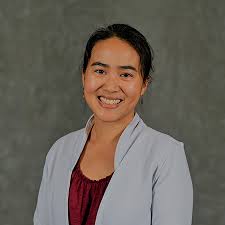
Cynthia Wei is a Teaching Professor and Director of Science Education in the STIA Program. She leads the Science for All program within the School of Foreign Service and teaches several Science for All courses, as well as an environmentally themed Calderwood Seminar in Public Writing.
Wei is a member of Georgetown’s Bee Campus team, which works to enhance pollinator health, abundance, and education on campus, and the DC Coalition of Higher Education for the Environment, Resilience, and Sustainability (DC-CHEERS). She is also a co-principal investigator and leads education and training for the NSF-funded Verena Biological Integration Institute on viral emergence, an interdisciplinary research initiative working to better predict and prevent pandemics.
Before joining Georgetown, Wei served as Associate Director of Education at the National Socio-Environmental Synthesis Center (SESYNC), where she led educational programs for undergraduate students and postdoctoral researchers and supported initiatives to broaden participation in science and advance interdisciplinary approaches to socio-environmental challenges. She previously worked on national science education initiatives as an AAAS Science and Technology Policy Fellow at the National Science Foundation’s Division of Undergraduate Education and as a Christine Mirzayan Fellow at the National Academy of Sciences.
Her scientific research has focused on animal cognition, including learning and navigation in honeybees during her doctoral research and social cognition in corvids during her postdoctoral work. She holds a Ph.D. in Ecology, Evolutionary Biology and Behavior and Zoology from Michigan State University and a B.A. in Biology, with a concentration in Neurobiology and Behavior, from Cornell University.