
Sarah Stewart Johnson and the Observatory Revamp
The Garden of the Stars: Where Earth Meets the Cosmos
Catherine Maggiori, a postdoctoral fellow in Professor Sarah Johnson’s lab, is helping to transform how Georgetown connects Earth-based environmental inquiry with our curiosity about the cosmos. Thanks to a Green Commons Award through the Earth Commons (ECo), Maggiori and Johnson have worked with SETI Institute artist-in-residence Jonathan Keats to bring to life The Garden of the Stars, a permanent, interactive installation now illuminated outside the Georgetown Observatory.
The garden was first conceived of as part of a workshop called “Earth at the Crossroads: a cosmic perspective on environmental crisis” that was hosted on Georgetown’s campus in collaboration with the Search for Extraterrestrial Life (SETI) Institute. The garden is a striking example of interdisciplinary collaboration.
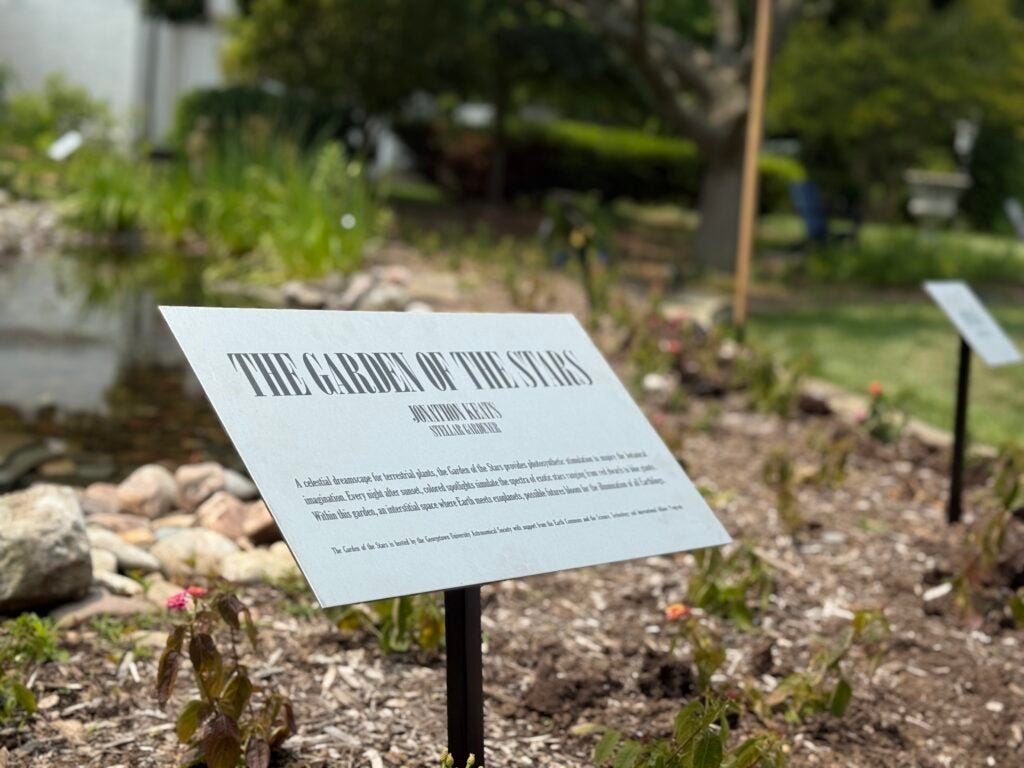
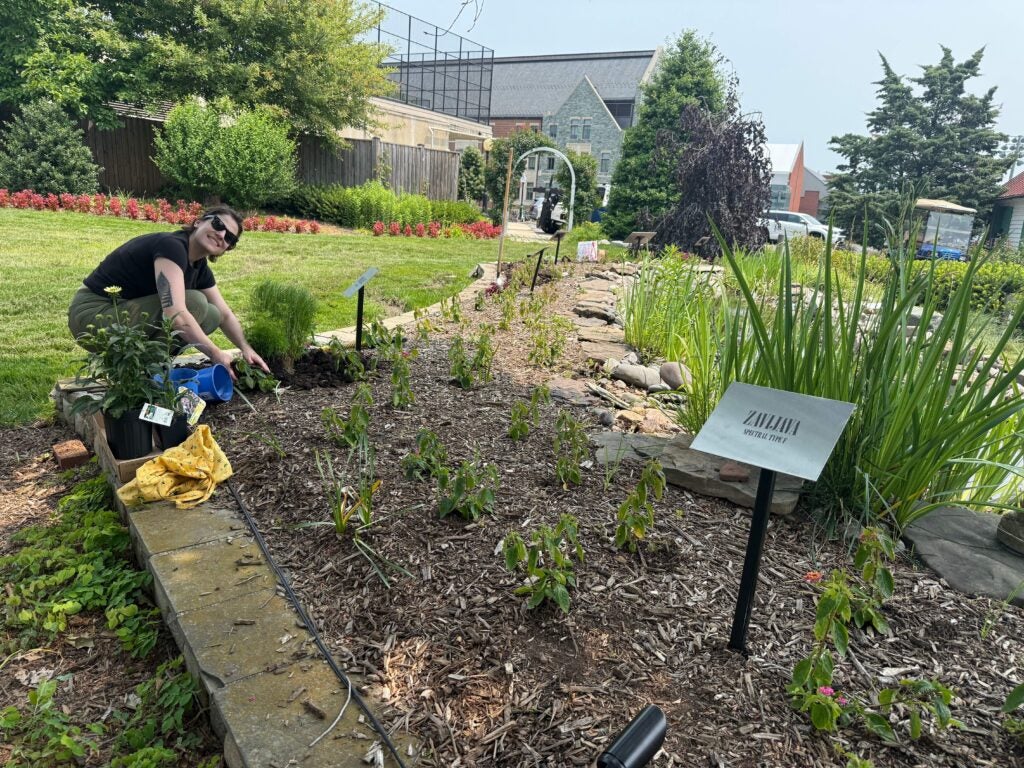
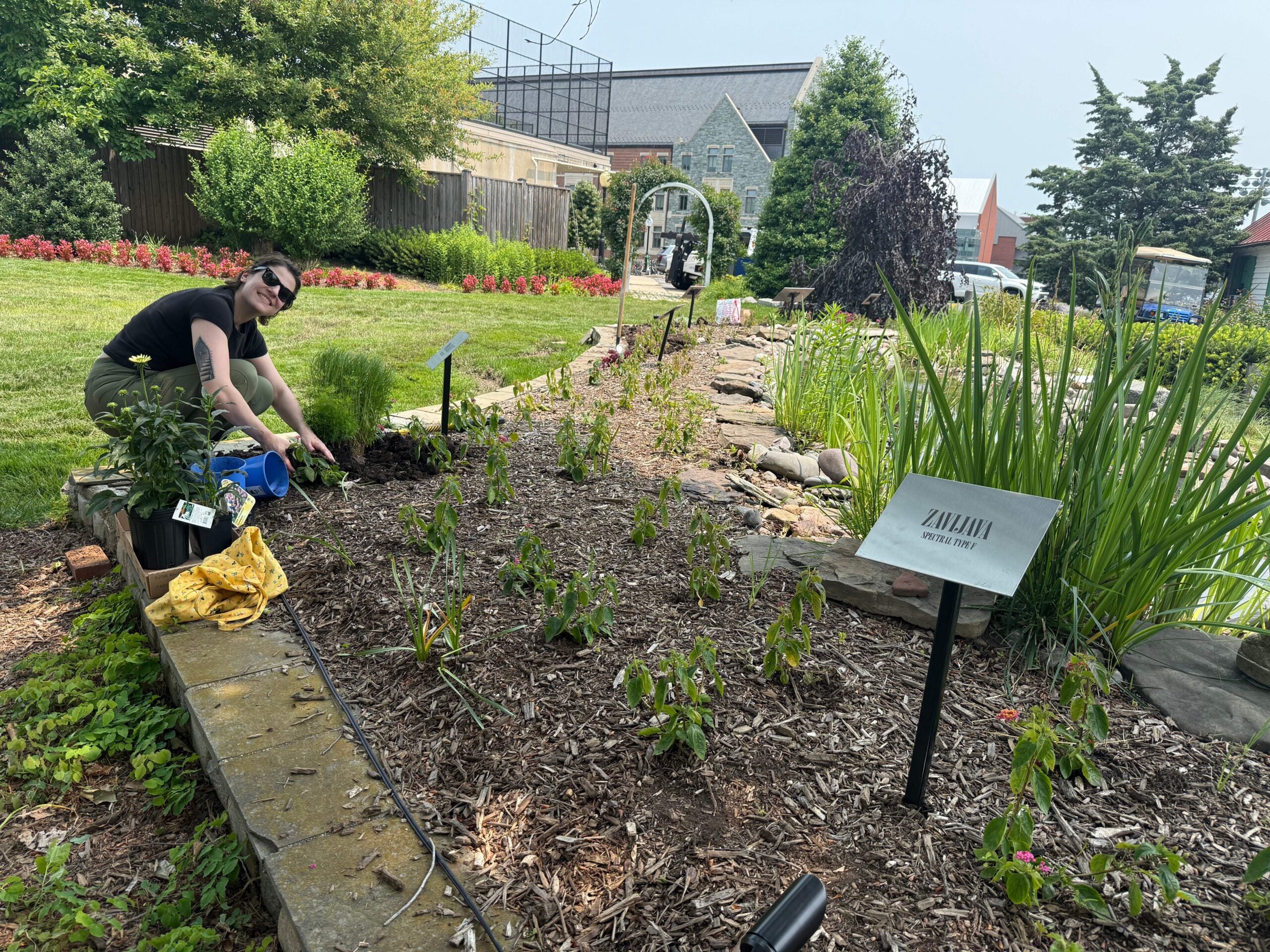
Designed as a “celestial dreamscape for terrestrial plants,” the garden features a collection of plant life illuminated by solar-powered spotlights in wavelengths that correspond to main sequence stellar classes. Visitors move from red-hued M-type stars to the blue of O-type stars, with each station pairing a star class with specific lighting and plantings—creating a visual and scientific experience that ties together astronomy, ecology, and art.
Maggiori explains, “The garden falls a bit outside of usual funding categories, but it was a perfect fit for the Earth Commons. It embodies the Laudato Si’ spirit of integral ecology and brings together environmental learning, artistic expression, and scientific exploration in one living, growing space.”
The Green Commons Awards aim to support imaginative, sustainability-focused efforts on campus and in the wider DC community. The Garden of the Stars exemplifies this mission by reimagining a little-used campus space into a point of curiosity and contemplation. As night falls and the lights activate, the garden invites passersby to reflect on our shared planetary home and the possibilities for life beyond it.
Now glowing each evening as part of Georgetown’s observatory landscape, the garden offers students, faculty, and visitors an unusual opportunity: to consider both the fragility and the wonder of our place in the universe.